Children arrive in the world ready to notice change. Science experiments for young children give that natural curiosity a clear place to go. A melting ice cube, a shadow on the wall, or a seed in soil can begin a meaningful question. The best early experiments do not require complicated explanations. They require time to watch, touch, and wonder. Families can create rich learning moments with ordinary materials. The goal is not to produce a perfect result. It is to help children see that their observations matter. That feeling turns curiosity into a lasting habit.
Start Science Experiments for Young Children With One Good Question
Every experiment becomes stronger when it begins with a question. Ask what might happen before you reveal the answer. Keep the question simple enough for a child to picture. Will the object sink or float? Which spot will melt the ice first? What happens when water moves from one cup to another? Let children share a prediction without pressure. Their guess does not need to be correct. It simply gives them something to notice. A good question invites children to stay with the experiment longer. It also teaches them that uncertainty is a valuable part of discovery.
Safety and Setup Build Calm
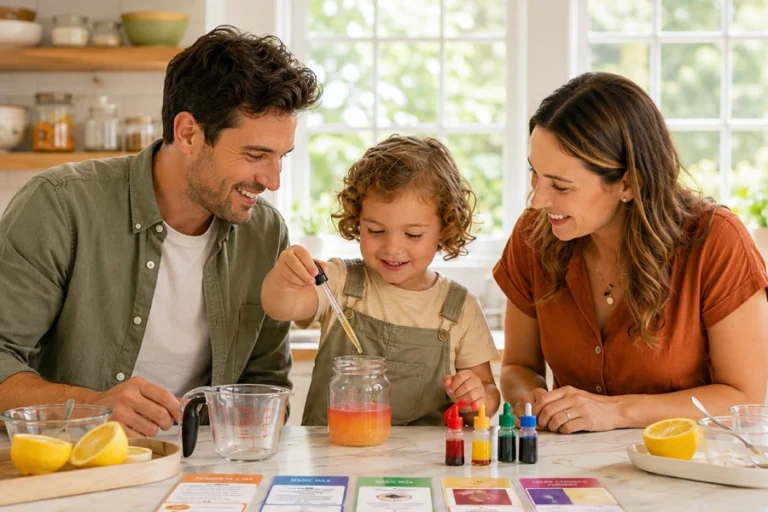
A calm science moment starts before the materials come out. Choose a clear surface and a small number of supplies. Explain the one or two rules that matter most. Keep water, food-safe ingredients, or nature objects within easy reach. Bring a towel or tray for quick cleanup. That preparation protects the playful feeling of the activity. It also gives children a model for handling materials carefully. Safety does not have to sound serious or restrictive. It can become part of the ritual. A prepared space tells children that their curiosity is welcome here.
Science Experiments for Young Children Become Memorable Through Observation
Children do not need advanced vocabulary to observe well. Encourage them to name what they see, hear, feel, or smell. Ask them to compare the beginning and ending of the activity. Pause long enough for details to emerge. You might hear them notice bubbles, color changes, or a colder surface. Those observations matter more than a polished explanation. A simple drawing can preserve what happened. So can a few spoken sentences at the end. When children notice details, science begins to feel personal. Personal discovery keeps the learning experience memorable long after the activity ends.
Let Outdoors Supply the Surprise
Nature offers experiments that change from day to day. A backyard walk can reveal leaves, insects, puddles, clouds, and shifting light. Bring one question outside and see where it leads. Look for objects that feel rough, smooth, dry, or damp. Notice which plants lean toward the sun. Watch a shadow move across the ground. These moments invite children to compare without needing a worksheet. Outdoor observation also gives restless bodies a useful purpose. The world becomes a laboratory without losing its sense of wonder. That balance keeps science lively for young learners.
Why Science Experiments for Young Children Need Room for Wrong Guesses
A prediction that misses the result is not a failure. It is a chance to discover something unexpected. When an experiment surprises a child, resist the urge to solve it immediately. Ask what they noticed instead. Invite them to try again with one small change. This builds persistence without making the moment feel academic. Children learn that science welcomes revision. They also learn that adults do not always have to know first. That shared curiosity creates trust. Wonder grows when the answer remains open for a little longer.
A Weekly Rhythm Keeps Science Experiments for Young Children Alive
Science is easier to sustain when families expect it regularly. Choose one simple day or time for a discovery moment. The experiment can be short, especially during busy weeks. Rotate between kitchen reactions, water play, weather watching, and outdoor walks. Save a favorite idea for the days when you need an easy win. End each session by asking what felt most surprising. That question creates a natural review without turning discovery into a test. With a warm routine, curiosity gets room to return. The goal is steady engagement, not a crowded calendar.