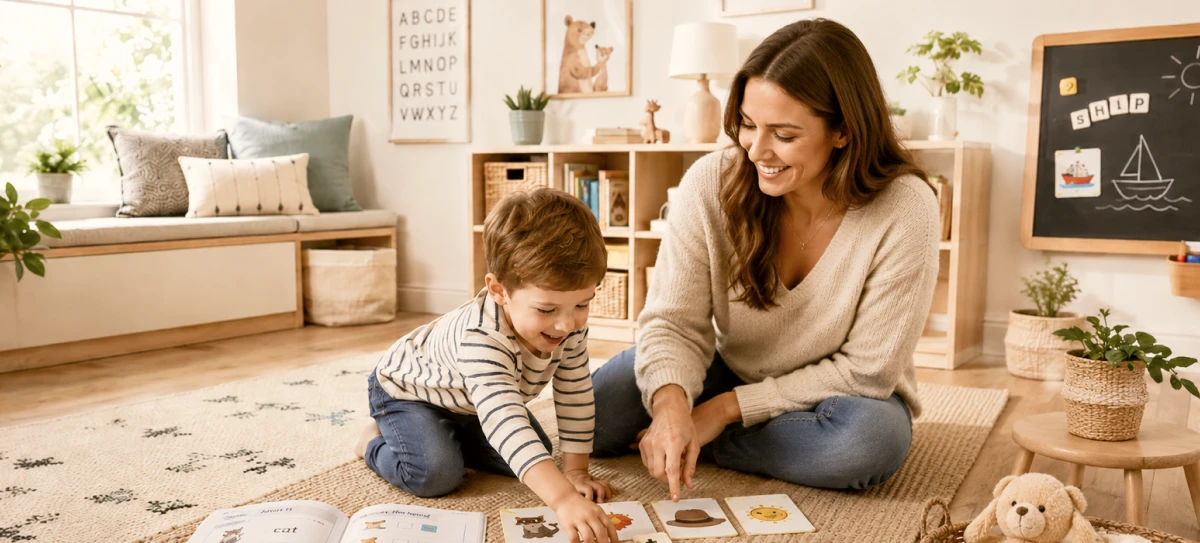
Learning to read often looks slower from the outside than it feels to a child. Phonics practice for beginning readers works best when every small gain receives attention. A child may first notice a beginning sound, then a rhyme, then a short word. Those steps are not minor. They are the building blocks of future fluency. Families can support them without turning each session into a test. The strongest routines stay short, clear, and encouraging. They leave room for laughter and movement. Most importantly, they give children a reason to try again tomorrow.
Why Phonics Practice for Beginning Readers Starts With Familiar Sounds
Children feel safer trying a new skill when the material feels familiar. Begin with names, favorite foods, beloved toys, or household objects. Say one word slowly and invite your child to hear its first sound. Notice the shape of the mouth and the air that moves. Then try another word with the same beginning. A simple match creates a quick success. This kind of early pattern recognition prepares children for letters later. It also makes the learning feel connected to their real world. Familiar sounds are the bridge between spoken language and early print.
Rhymes and Movement Break the Ice
Rhymes help children listen for sound patterns without asking them to read. Use silly pairs, familiar songs, or made-up words to keep the mood light. A child can jump when two words rhyme. They can stomp when the ending sounds different. Movement gives restless learners a helpful role. It also turns listening into something physical and memorable. When the game ends, ask which words sounded alike. Let your child explain in their own way. A playful answer is enough at this stage. The purpose is to make close listening feel fun rather than formal.
How Phonics Practice for Beginning Readers Makes Blending Less Intimidating
Blending can feel challenging because children must hold several sounds in mind. Make the process visible with a finger slide or small counters. Say the sounds slowly at first. Then move them closer together on the second try. Use short words that create a satisfying result. Stop before the task becomes exhausting. Small steps show children that letters can work together. Once the connection clicks, their confidence can rise quickly. The important part is allowing enough time for that click to happen. Gentle repetition helps children understand that reading is a process, not a performance.
Confidence Changes the Pace
Early readers often need reassurance more than correction. Notice effort before pointing out what needs another try. Say that the sound was close or that the child listened carefully. Then offer a small clue instead of the whole answer. This keeps control in the child’s hands. It also teaches them that practice is allowed to be imperfect. Praise should sound specific and honest. Mention when they remembered a sound or tried a new blend. These observations build a stronger identity than generic applause. A confident reader is more willing to take the next risk.
When Phonics Practice for Beginning Readers Needs a Reset
Even a good routine can become tense after a difficult attempt. Watch for signs that your child needs a break. Looking away, guessing wildly, or becoming silly can signal overload. Reset with movement, a familiar rhyme, or an easier word. Returning to a successful skill protects the relationship with learning. You do not need to push through every lesson. A pause can be a smart teaching choice. Children remember how practice felt long after they forget a single word. A reset tells them that learning can remain safe even when something feels hard.
Keep Phonics Practice for Beginning Readers Warm Between Sessions
Reading growth responds well to gentle repetition across the week. Keep a few favorite activities ready to use again. Repeat a rhyme during a car ride or point out a familiar sound at breakfast. Revisit letter tiles after a story. Invite your child to choose the game that comes next. Ownership adds motivation to the routine. A short return to familiar practice reinforces progress without creating pressure. As skills grow, introduce one small change at a time. That steady rhythm turns early literacy into a comfortable part of family life.